Webinar Recording, Reflections, and Discussion
Better mental health care environments cannot be created by any one profession or perspective alone.
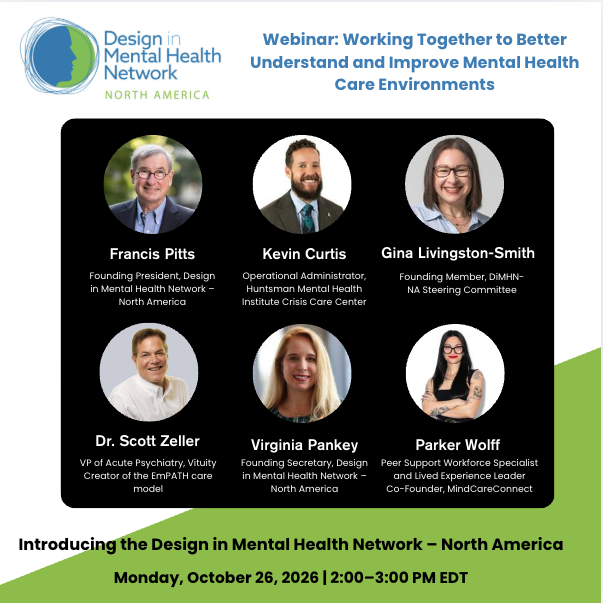
On October 26, 2026, the Design in Mental Health Network – North America (DiMHN-NA) brought together perspectives from lived experience, mental health care, crisis services, peer support, architecture, interior design, operations, and standards development.
Together, the speakers explored what meaningful collaboration looks like, how different forms of knowledge can inform better decisions, and why designing environments that support safety, dignity, autonomy, and recovery requires us to work across traditional boundaries.
Explore the webinar recording, presentation slides, key reflections, and questions raised by attendees.
Plays from YouTube. Watch on YouTube (opens in a new tab)
Meaningful involvement is about more than inviting people to share their views. It requires considering when people are engaged, what influence they have, and how their contributions shape decisions.
Co-design and co-production offer different approaches, but both depend on genuine participation rather than simply validating decisions already made.
A question to consider How can collaboration begin early enough to make a meaningful difference?
The same environment can be experienced very differently by someone receiving care, a clinician, a peer supporter, or a designer.
Bringing these perspectives together does not mean everyone must agree. It means understanding the reasons behind different priorities and making more informed decisions.
A question to consider Are we creating space for perspectives that challenge our assumptions?
Safety is essential, but so are privacy, personal agency, connection, and opportunities for recovery.
Design decisions need to recognize how these priorities interact rather than treating them as competing requirements to be addressed separately.
A question to consider How can we create environments that protect people while also respecting their dignity and autonomy?
Every project involves competing needs, constraints, and priorities.
Effective collaboration helps teams question assumptions, understand different viewpoints, and distinguish between what is desirable and what is essential.
A question to consider Are we asking the right questions before deciding on the answers?
Mental health care does not happen independently of its surroundings.
The physical environment influences relationships, feelings of safety, opportunities for choice, and people’s sense of being valued.
Design should therefore be considered alongside models of care, everyday practice, and the experiences of those using and delivering services.
A question to consider What does the environment communicate to the people who experience it every day?
The conversation continued through questions and suggestions from attendees, highlighting opportunities for DiMHN-NA as the Network develops.
These are some of the themes raised, including questions that deserve further exploration.
Attendees asked about involving landscape architects, urban designers, planners, security specialists, and technology professionals.
Mental health environments extend beyond individual rooms and facilities. Outdoor spaces, neighborhood connections, security strategies, and technology can all influence the experience of care.
This raises an important opportunity to bring a wider range of disciplines into the conversation from the earliest stages of planning and design.
One attendee emphasized the importance of including clinicians from the beginning to help avoid operational challenges later.
Genuine co-production needs to recognize lived experience alongside clinical, operational, and design expertise. Each perspective contributes knowledge that others may not have.
The challenge is ensuring these voices can influence decisions throughout the process.
A question was raised about recognizing the social, cultural, and community contexts that shape mental health experiences across North America.
Approaches developed in one location cannot simply be transferred elsewhere without understanding local needs, experiences, and systems of care.
Engaging local communities and people with lived experience will be important in shaping relevant approaches.
Attendees suggested stronger partnerships with universities, including teaching and research, alongside engagement with K–12 schools.
Even relatively modest changes to learning environments, such as providing natural light in student support spaces, can create opportunities to rethink how environments support young people’s needs.
These suggestions point toward opportunities for collaboration across education, research, and practice.
A suggestion was made for future sessions exploring different care models, design processes, and operational approaches.
Understanding the thinking behind projects, rather than focusing only on their physical outcomes, could help designers, caregivers, and operators challenge familiar assumptions and learn from alternative approaches.
One attendee highlighted the power of personal stories in building understanding and connection.
Sharing lived and personal experiences can help challenge the distinction between “us” and “them” and recognize mental health as something that concerns us all.
Building a successful Network is not only about connecting professional disciplines. It is about creating opportunities for people to contribute their knowledge and experiences.
Attendees expressed interest in a North American conference and trade show, specialized sessions exploring products and their applications, and webinars examining innovative models of care.
These suggestions provide valuable input as DiMHN-NA considers future events, partnerships, and opportunities for knowledge exchange.
The webinar was an opportunity to begin a wider conversation, not to provide all the answers.
The questions raised reinforce the importance of bringing people together across disciplines, sharing evidence and experience, and challenging assumptions about how mental health environments are planned, designed, and operated.
As DiMHN-NA develops, we want to encourage these conversations and create opportunities for people to learn from one another.
Better mental health environments begin with better understanding. And better understanding begins with people working together.

Francis Pitts is the Founding Principal of architecture+ in Troy, New York, and has spent his career planning and designing mental health care environments.
He has consulted on more than 200 projects involving more than 25,000 mental health beds across the United States and Canada and has long advocated for evidence-informed design in mental health care.
His contributions have been recognized with The Center for Health Design’s 2018 Changemaker Award, the Healthcare Facilities Symposium & Expo’s 2022 Founder’s Award, and the American College of Healthcare Architects’ 2024 Lifetime Achievement Award.
Francis is the founding President of the Design in Mental Health Network – North America and will moderate this multidisciplinary conversation.

Dr. Scott Zeller is a psychiatrist and the creator of the EmPATH (Emergency Psychiatric Assessment, Treatment and Healing) model, which reimagines how people experiencing a psychiatric emergency can be supported in a more therapeutic environment.
Over a three-decade career, Scott has advised more than 200 hospitals, universities, mental health systems and government agencies across the United States. His work brings together clinical innovation and environmental design, with a focus on providing timely, compassionate crisis care in settings designed around the needs and experiences of the people using them.
More than 60 EmPATH units now operate across the United States. Scott has made the model freely available for organisations seeking to improve psychiatric emergency care and the environments in which it is delivered.
He is also Past-President of the American Association for Emergency Psychiatry and the National Coalition on Psychiatric Emergencies, and has written and lectured extensively on improving emergency psychiatric care.
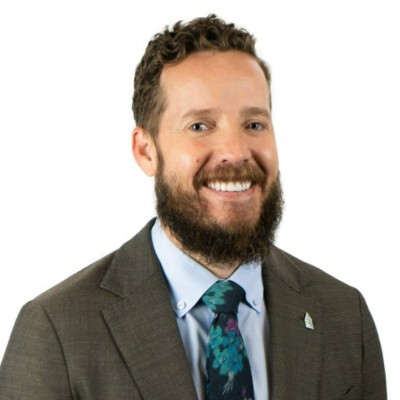
Kevin Curtis has worked in mental health care for 20 years across clinical and administrative roles.
He is passionate about creating efficient, evidence-informed, and human-centered access to care for people experiencing mental health crisis.
Kevin is the Operational Administrator for the Huntsman Mental Health Institute Crisis Care Center, an 80,000-square-foot continuum of care for people experiencing mental health crisis.
He is also a member of The Center for Health Design’s Behavioral and Mental Health Environment Network and has been an early advocate for the Design in Mental Health Network – North America.

Gina Livingston-Smith is an award-winning interior designer at HDR with more than 20 years of experience in health care planning and design.
Her work focuses on evidence-informed, human-centered environments that support healing, safety, and well-being, with particular expertise in mental health settings.
Gina is a recognized industry speaker, a founding member of the Design in Mental Health Network – North America Steering Committee, a member of The Center for Health Design’s Behavioral and Mental Health Environments Network, and an adjunct faculty member at Kent State University, where she mentors future health care designers.

Virginia Pankey is HOK’s Behavioral Health Practice Leader and believes that thoughtful planning can play an important role in supporting healing outcomes.
A frequent speaker at health care design conferences, the EmPATH Summit, and the National Update on Behavioral Health Emergencies, Virginia is actively involved in developing industry guidance and standards.
Her work with the FGI Health Guidelines has included chairing the Behavioral Health Crisis Unit topic group for the 2022 edition and co-chairing the Behavioral and Mental Health topic group for the 2026 edition.
Virginia is the founding Secretary of the Design in Mental Health Network – North America.

Parker Wolff is a nationally recognized peer support workforce specialist and lived experience leader.
She was named the 2024 SAMHSA STAR Peer Support Worker of the Year, becoming the award’s inaugural recipient.
With more than a decade of experience developing peer support programs within state psychiatric hospitals, Parker brings together firsthand experience of psychiatric care and extensive institutional knowledge.
She is Co-Founder of MindCareConnect, an international speaker on peer workforce development and the value of lived experience as professional expertise, and has been actively advising founding members of the Design in Mental Health Network – North America Board.
The conversation continues beyond this webinar. Here’s how you can support DiMHN-NA and get involved in our growing multidisciplinary community.
Founding Sponsorship is open in 2026.
Founding Sponsors help establish the foundations of a strong, independent, and multidisciplinary North American Network.
Organizations can register their interest now and support DiMHN-NA during its formative stage.
Membership is planned to launch in 2027.
We are developing individual and organizational membership options during 2026, with full details on benefits and pricing to follow.
Free membership is currently intended for people with lived experience, caregivers, and students, helping make the Network accessible to a wider community.
Follow our progress, discover upcoming events, and join the conversation.
Together, we can improve mental health environments through better design, shared knowledge, and genuine collaboration.