What changes when the people who experience mental health care become partners in designing it?
For decades, mental health facilities have often been planned around the requirements of institutions, clinical processes, and operational systems.
Safety, efficiency, and effective care delivery are essential. But so are dignity, autonomy, human connection, and the experience of the people receiving care.
And those priorities do not always align.
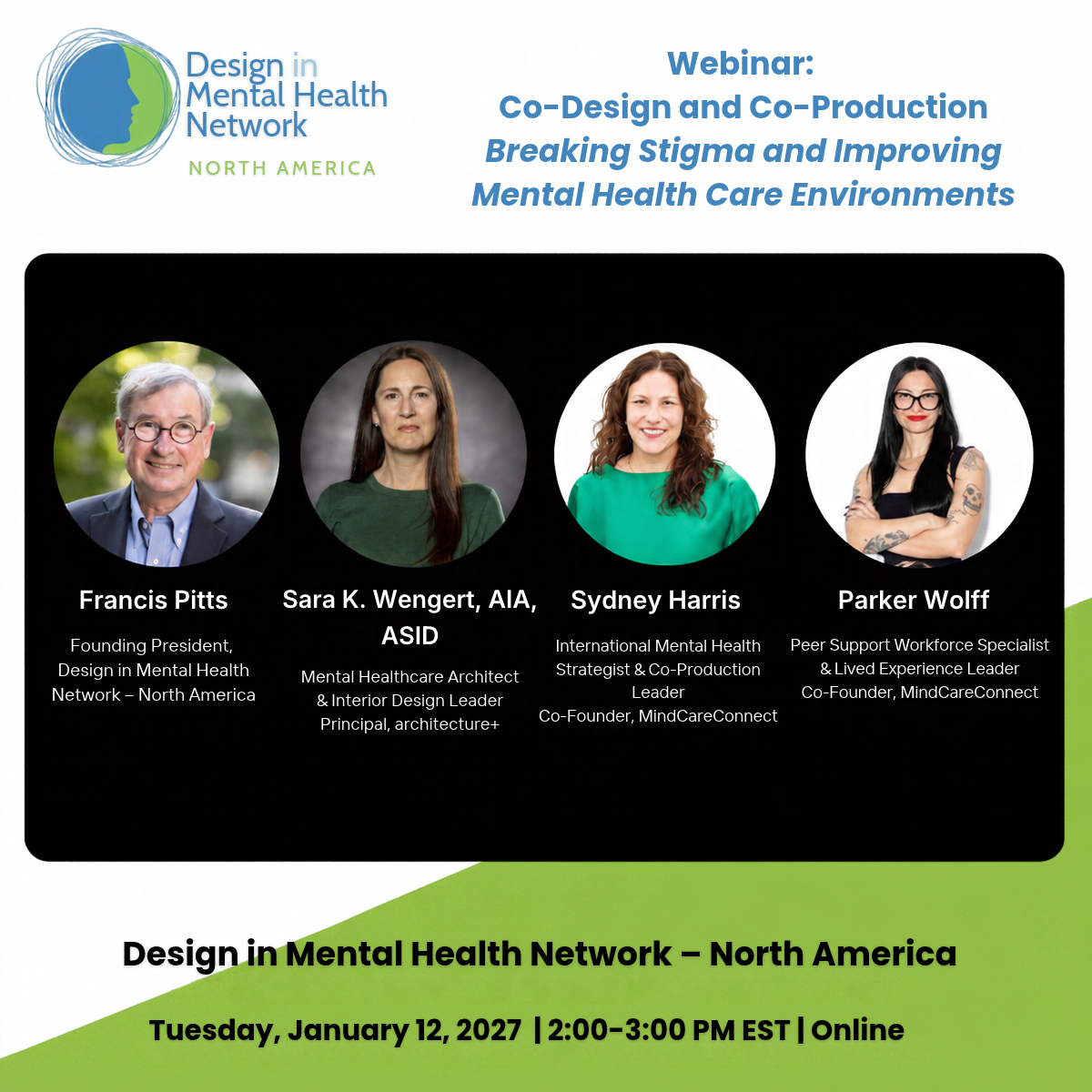
On Tuesday, January 12, 2027, the Design in Mental Health Network – North America (DiMHN-NA) will bring together leaders in mental health facility design, lived experience, peer leadership, and systems improvement for a webinar exploring how co-design and co-production can help create better mental health care environments.
Co-Design and Co-Production: Breaking Stigma and Improving Mental Health Care Environments will examine how meaningful collaboration is already influencing mental health facilities across North America, what can be learned from the UK, and how these approaches can become a more consistent part of planning and design.
From designing for people to designing with them
Historically, mental health care was often experienced as something done to a person.
Over time, approaches have increasingly focused on providing care for people, with greater recognition of their individual needs.
Co-production represents a further shift.
It asks what becomes possible when people with lived experience, clinicians, designers, and healthcare organizations work together to shape care models and the environments that support them.
This is not simply about gathering feedback.
It is about recognizing different forms of expertise and ensuring they can meaningfully influence decisions.
A person with lived experience may identify aspects of an environment that others overlook.
A clinician may understand how spatial arrangements affect therapeutic relationships and care delivery.
An architect or designer may recognize opportunities to translate these insights into practical, supportive environments.
Each perspective contributes something important.
The challenge is learning how to bring them together effectively.
Breaking stigma through design

The physical environment communicates something about the people who use it.
An institutional space dominated by control and restriction can reinforce feelings of powerlessness or exclusion.
An environment designed to support dignity, choice, privacy, and connection can communicate something very different.
But creating those environments requires more than good intentions.
It requires questioning established assumptions about mental health care and involving the people most affected by design decisions.
The webinar will explore how co-production can help challenge stigma, influence planning priorities, and support more recovery-oriented environments.
It will also examine practical questions.
How can people with lived experience influence projects from the beginning?
What techniques make engagement meaningful?
How can healthcare organizations embed co-design into their established planning processes?
And what can US organizations learn from approaches developed in the UK?
Four perspectives, one conversation
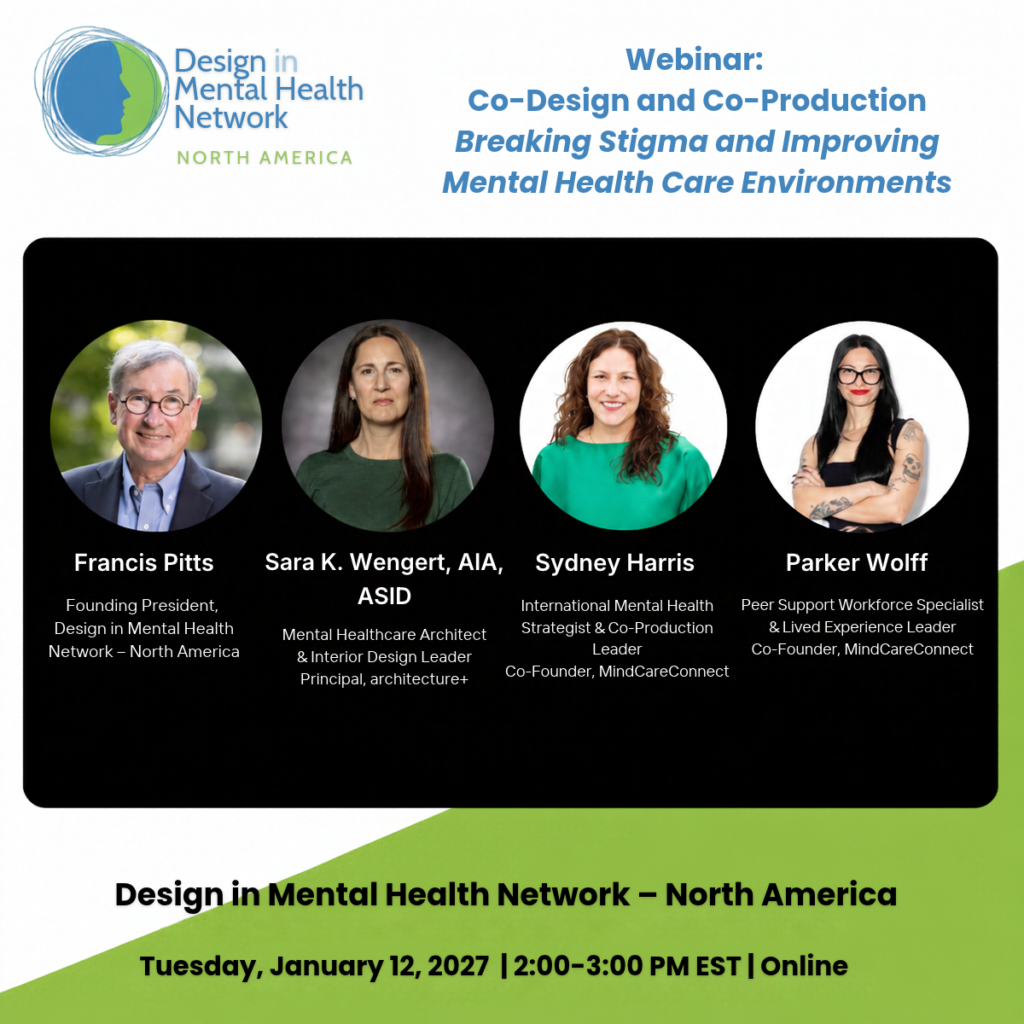
The webinar will be moderated by Francis Pitts, Founding Principal of architecture+ and founding President of DiMHN-NA, whose career has focused on designing mental health facilities that challenge stigma and support more humane approaches to care.
He will be joined by:
- Sydney Harris, DrPH(c)
Co-Founder, MindCareConnect | International Mental Health Strategist
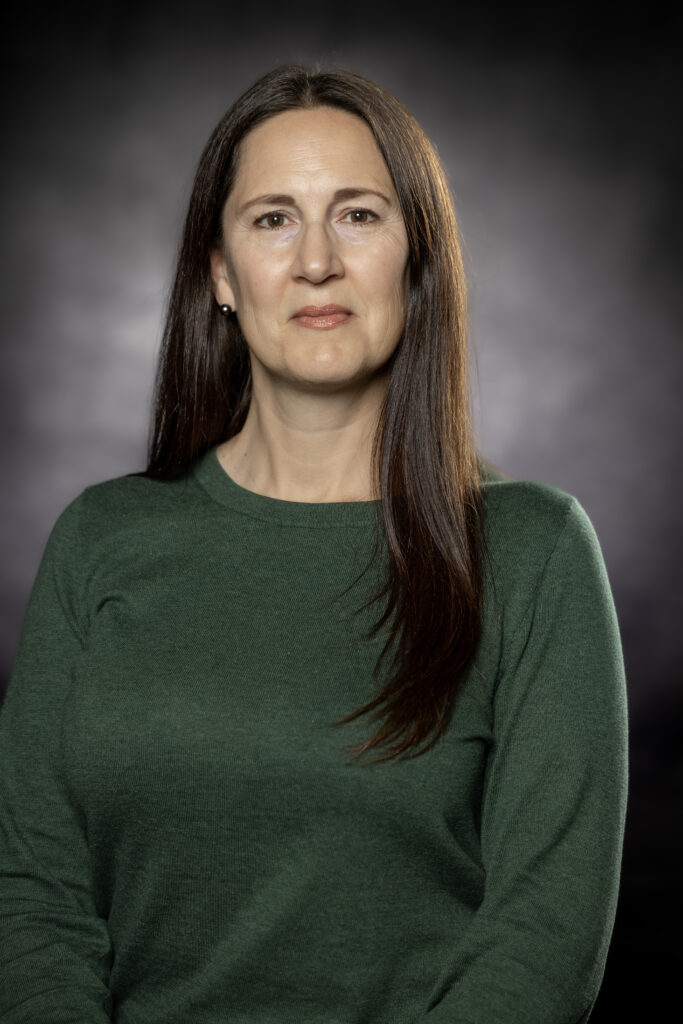
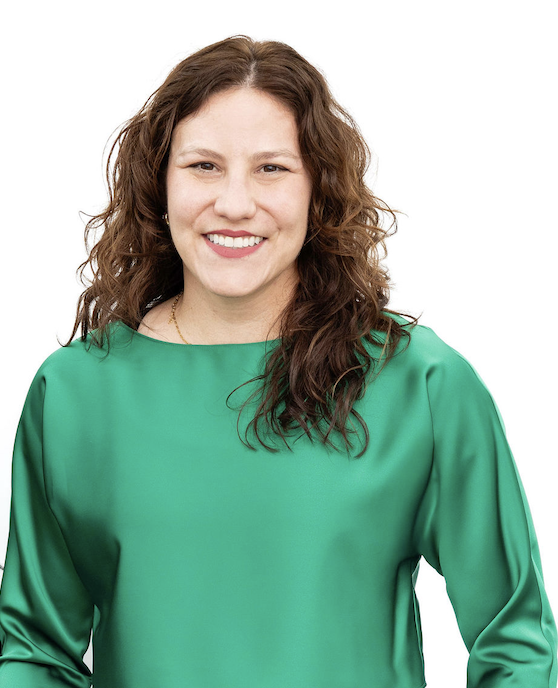
Sydney Harris is an international mental health strategist and Co-Founder of MindCareConnect, advancing lived-experience co-production in US mental healthcare. Her experience includes leading the Austin State Hospital Redesign and cross-sector mental health initiatives. She is co-editor of Redesigning the U.S. Mental Health Care System and is pursuing a Doctorate in Public Health at Johns Hopkins University.
- Parker Wolff
Peer Support Workforce, Specialist
Lived Experience Leader, Co-Founder, MindCareConnect
A nationally recognized peer support workforce specialist and lived experience leader, Co-Founder of MindCareConnect, and inaugural recipient of the 2024 SAMHSA STAR Peer Support Worker of the Year award. Parker brings more than a decade of experience developing peer support programs within state psychiatric hospitals, alongside firsthand experience of psychiatric care.
- Sara K. Wengert, AIA, ASID
Principal, architecture+
Sara K. Wengert leads national mental healthcare projects at architecture+, including statewide campus master planning for the New York State Office of Mental Health. Her work combines architecture, interior design, research, and collaboration to create safe, therapeutic environments that support dignity, healing, and recovery. She has also contributed to national healthcare facility design guidelines.
Together, the panel will explore real-world approaches to co-design and co-production, the changes these approaches can help achieve, and the opportunities to embed them more widely across US mental health care systems.
The webinar will be moderated by Francis Pitts, Founding Principal of architecture+ and founding President of DiMHN-NA, whose career has focused on designing mental health facilities that challenge stigma and support more humane approaches to care.Together, the panel will explore real-world approaches to co-design and co-production, the changes these approaches can help achieve, and the opportunities to embed them more widely across US mental health care systems.


Moving from principle to practice
Co-production is increasingly recognized as an important part of recovery-oriented mental health care.
But recognizing its value is not the same as putting it into practice.
Meaningful participation requires time, commitment, and a willingness to reconsider how decisions are made.
It also requires organizations to recognize lived experience as expertise, rather than simply another source of feedback.
This webinar will explore how that shift can influence not only the design of individual facilities, but also the systems and processes through which mental health environments are developed.
Because better environments do not begin with buildings.
They begin with the people who will experience them.
Join the conversation
Co-Design and Co-Production: Breaking Stigma and Improving Mental Health Care Environments
Tuesday, January 12, 2027 at 12:00 PM – 13:00 PM EST
Register for the webinar here.
Better mental health care begins when we stop designing for people and start designing with them.
Stay connected: follow DiMHN-NA on LinkedIn and join our mailing list for news, events, shared learning, resources and opportunities to get involved.